

If you’ve spent any time on car forums or watched enough build videos, you already know carbon fiber divides people. Some guys swear by it. Others think it’s the automotive equivalent of putting a spoiler on a front-wheel-drive hatchback. The truth, as usual, sits somewhere in between. But it’s worth actually digging into why carbon fiber has such a complicated reputation in the enthusiast world.
Where Did the Carbon Fiber Obsession Came From?
Carbon fiber reinforced polymer (CFRP) is a composite material made from woven carbon strands locked in resin. It offers a similar level of strength to steel while being around five times lighter. That ratio is why engineers fell in love with it.
The motorsport world was the first to really run with it. In 1981, McLaren introduced the MP4/1, the first F1 car to feature a monocoque chassis made entirely from carbon fiber. The weight reduction was significant, the structural rigidity increased dramatically, and its ability to absorb crash energy made it a genuine safety breakthrough. That car won the British Grand Prix. After that, everyone wanted in.

The cost angle is where it gets interesting. Those early carbon strands cost the equivalent of nearly $9,000 per kilogram in today’s money. Engineers used it like they were sprinkling gold dust. Today, general-purpose carbon fiber runs under $30 per kilogram. That price drop is exactly what opened the floodgates to the aftermarket scene.
How Carbon Fiber Went From Racetrack to Rice
When carbon was first trickling into consumer cars, it was genuinely exclusive. Ferrari and Lamborghini were using it. McLaren was building cars around it. High-end manufacturers made it visible on purpose, as a deliberate status signal. It meant something.
Then the aftermarket caught up. Prices dropped. Suddenly everyone could bolt a carbon mirror cap onto a base-spec hatchback and feel like they were pulling out of Maranello. UK demand for carbon fiber automotive components tripled in recent years. The material went mainstream fast. And when anything goes mainstream in the car world, the backlash follows just as quickly.
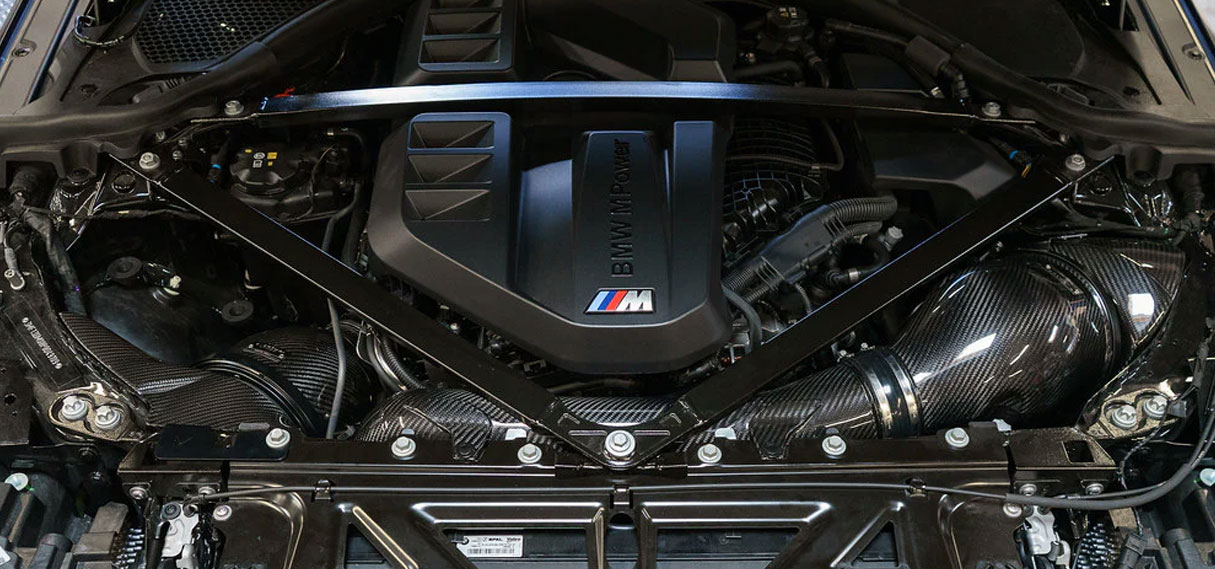
Carbon fiber’s roots in F1 and aerospace position it as a status symbol. Owning exotic carbon parts is supposed to link you to elite engineering and motorsport heritage. That’s the pitch. And it’s not entirely wrong. But it’s also not the full story.
The problem is that most people buying carbon accents for their daily driver aren’t doing it for engineering reasons. They’re doing it for the look. Which is fine, honestly. But it shifts carbon fiber from performance material to styling language. And that shift is where most builds go sideways.
The Real Problem Is Not Carbon Fiber, It’s How People Use It
In the consumer aftermarket, “carbon fiber” often means a single layer of fabric laminated over a plastic part, or worse, a hydro-dipped vinyl print. These cosmetic applications can actually add weight rather than remove it, serving purely as a visual status symbol. Yes, you can buy something marketed as a carbon fiber upgrade that makes your car heavier. That’s not a performance mod. That’s a sticker with extra steps.
One Corvette Forum member summed it up cleanly: “Real carbon fiber used as decoration makes no sense to me. Used as it’s intended, as a lightweight structural material, it makes perfect sense.”
The distinction worth keeping in your head when you’re shopping:
- Replacement parts (you remove the OEM piece and install CF instead) can genuinely save weight. Hoods, roofs, doors, splitters, diffusers. These are the legitimate use cases.
- Overlays and covers (you stick CF on top of what’s already there) add cost, add weight, and add nothing else. These are pure aesthetics. Not inherently evil, but call it what it is.
How Much Carbon Fiber Is Too Much?
Here’s the practical framework, based on what experienced builders actually say.
The OEM+ Rule
Ask yourself: could this part have come from the factory on a higher-spec version of this car? If yes, it probably works. Mirror caps, a CF spoiler, a carbon interior trim piece on a sports car. These feel intentional. They look like they belong.
If the answer is “no factory would ever put that there,” you’re in creative territory. That’s not automatically wrong, but it needs to be done with real consistency across the build.
The Contrast Rule
This one is underrated. When everything is carbon fiber, it loses its impact. The weave disappears into visual noise. The reason CF looks sharp on well-executed builds is contrast: carbon against paint, carbon against body color, carbon as an accent against the rest of the car.
Small accents look premium. Full carbon exterior and interior builds tend to look busy, like the builder kept going past the point where it still worked.
The Function Rule
Does this part have a functional or visual purpose? A CF splitter changes the aero. A CF roof lowers the center of gravity. A CF mirror cap on a grocery-getter does neither. That’s a styling choice, full stop. Own it as one, and it’s fine. Pretend it’s a performance upgrade, and you’re lying to yourself and everyone else reading your build thread.
The “Front Lip” Reality Check
One Porsche owner on Rennlist made a point that doesn’t get talked about enough. He loves CF accents but won’t put an expensive carbon lip on the front of his car because he scrapes constantly. An OEM plastic lip is a consumable part. A carbon one is an expensive mistake waiting to happen.
Think about which parts on your specific car take regular abuse. Lips, diffusers, splitters, anything that sits low. On a track car, carbon there makes sense because fitment and aerodynamics matter more than a scuff. On a daily? Maybe not.
Why Some Carbon Builds Look Cheap
Real carbon fiber is not cheap. So there’s nothing more frustrating than dropping serious money on genuine CF parts and ending up with a build that looks like it came from a discount bin. No fake weave, no vinyl wrap, actual carbon. And it still looks wrong. The parts aren’t the problem. The decisions around them are.
Real carbon fiber looks three-dimensional, almost like a mile-deep weave. ABS-printed carbon fiber looks flat and two-dimensional by comparison. The difference is visible to anyone who gets close, even people who don’t know cars.
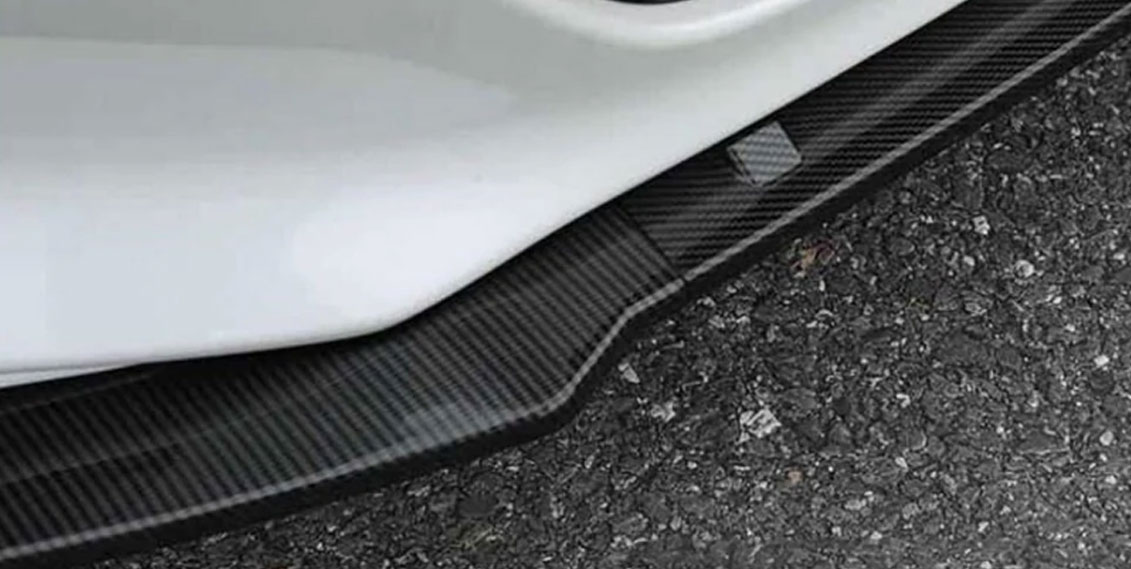
But even real carbon can look bad. The most common offenders:
- Mismatched weave direction across different panels
- Mixing gloss CF with matte CF on the same car
- Random CF parts with no relationship to each other visually
- Carbon interior on a car whose exterior tells a completely different story
Buying quality parts from consistent manufacturers makes a bigger difference than most people realize. If your hood weave runs at a different angle to your trunk lid, that’s not a premium build. It just looks like you bought whatever was cheapest from different sellers.
When Carbon Fiber Actually Works
The builds where carbon looks genuinely good share a few things in common. Ferrari, Lamborghini, and Pagani use carbon fiber strategically throughout the vehicle to achieve optimal balance and strength. Their engineers use it in pursuit of performance first, with aesthetics following from function. That’s the mindset. Even if you’re not building a Pagani, the logic holds.

As long as exposed carbon fiber shows up on hypercars and supercars, it’ll still read as premium and desirable on the street. In small doses, it adds a clean accent. In large doses on everyday cars, it starts fighting against itself.
The builds that work are usually the ones where someone picked a direction and stuck to it. A clean OEM+ Supra with CF mirrors, a CF lip, and a CF spoiler reads as intentional. The same Supra with CF mirror caps, CF interior overlays, a CF steering wheel trim, CF door handles, CF seat backs, and a CF dash cluster looks like someone found a clearance sale and bought everything.
So, Is Carbon Fiber Overrated?
Here’s the honest answer.
As an engineering material? Absolutely not. Carbon fiber is legitimate, proven technology. In the right application it genuinely changes how a car performs. That’s not hype. That’s physics.
As a styling obsession? Yeah, a bit. The “carbon hype” in automotive hit a peak around 2013 when BMW presented the i3 with a fully carbon body. A few years later, OEMs had largely shifted back to light metals because carbon parts struggled to meet the industrial and economic requirements of mass production. Even the industry overcorrected.
The real issue is a mismatch between expectation and application. People buy CF parts for the idea of performance, not the actual performance gain. On a street car with mismatched carbon pieces stuck over factory plastic, you’re not gaining anything. You’re just spending money on aesthetics and pretending otherwise.
That’s not a knock on aesthetics. There’s nothing wrong with wanting your car to look sharp. But be honest about what you’re doing.
The Final Thoughts
Carbon fiber doesn’t make a build look premium. Design discipline does.
The material is just a tool. Used with intention, on the right parts, with consistent quality, it’s one of the best visual upgrades you can make to a performance-oriented car. Used carelessly, it turns a clean build into a catalog page.
Pick your parts with purpose. Know whether you’re chasing performance or aesthetics. Build a consistent theme and stick to it. And if you’re going CF on a front lip, check your ride height first.
That’s really all there is to it.