Choosing an exhaust upgrade is not just about making a car louder. The right system changes how a vehicle sounds, feels, and responds. The wrong one adds volume without refinement, costs more than it should, or simply doesn’t match the way the car is actually driven.
The three common upgrade options are axle-back, catback, and full exhaust system. Here’s the short version: axle-back is mainly for sound and style, catback is the best all-around upgrade for most drivers, and a full exhaust system is for more serious performance builds.
Quick Comparison
| Feature | Axle-Back | Catback | Full Exhaust |
|---|---|---|---|
| Replaces | Rear section, mufflers and tips | Catalytic converter back | Larger path: downpipes, headers, or manifolds depending on vehicle |
| Sound change | Mild to moderate | Moderate to strong | Strong to dramatic |
| Performance potential | Low | Mild to moderate | Highest |
| Cost | Lowest | Mid-range | High |
| Tune needed | Usually no | Usually no | Often recommended |
| Best for | Sound and appearance | Balanced upgrade | Complete performance builds |
Note: terminology varies by manufacturer and platform. On some cars, a “full exhaust” may mean turbo-back, header-back, or a complete system including downpipes, mid-pipes, and tips. The exact parts depend on the vehicle.
What is an Axle-Back Exhaust?
An axle-back replaces the rear section of the exhaust, usually from around the rear axle to the tips. Depending on the vehicle, this may include rear pipes, mufflers, exhaust valves, and tips. Its main purpose is sound and appearance. It can give the vehicle a deeper tone and a slightly more aggressive look without replacing a large part of the system. For some cars, that is genuinely enough.
The limitation is clear: an axle-back usually does not create meaningful performance gains. It changes the smallest portion of the system, so its effect on exhaust flow and power is minimal.
Choose an axle-back if you want: a mild sound upgrade, better-looking tips, simpler installation, lower cost, or minimal changes to the factory system.
What is a Catback Exhaust?
A catback replaces the exhaust from the catalytic converter back — which can include mid-pipes, resonators, mufflers, exhaust valves, and tips depending on the vehicle and system.
Because it changes more of the exhaust path, a catback usually delivers a stronger difference in sound, better flow potential, and a more complete upgrade feel. For most performance cars, this is the sweet spot: a noticeable improvement without going as far as a full exhaust system.
A good catback can make the car feel more alive without making it difficult to live with daily, especially with a valved system, where the driver can switch between a quieter and more aggressive note depending on the moment.
Choose a catback if you want: a noticeable sound upgrade, better exhaust flow, a more complete system than axle-back, good daily drivability, and fewer tuning concerns than a full exhaust.
What is a Full Exhaust System?
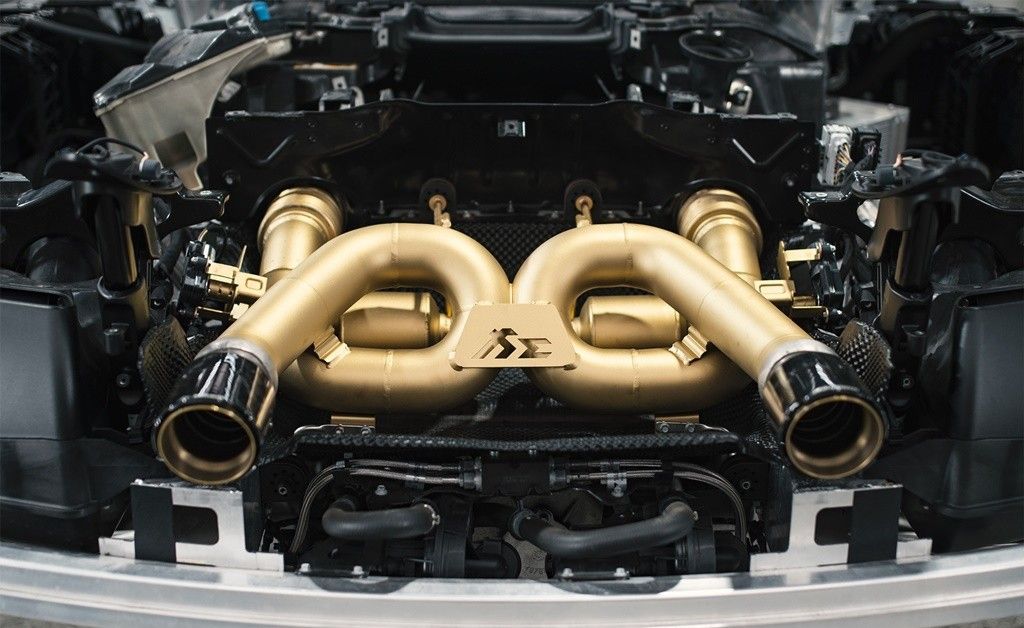
A full exhaust system replaces a larger portion of the exhaust path. Depending on the platform, it may include headers, manifolds, downpipes, mid-pipes, resonators, mufflers, valves, and tips.
This is the most complete and aggressive upgrade of the three, and it carries the highest performance potential — particularly on turbocharged vehicles, where changes to the downpipes can have a meaningful effect on flow and tuning potential. On naturally aspirated cars, headers and full-system design play a major role in sound character and power delivery.
But a full exhaust is not automatically the best choice. It costs more, requires more planning, and may need a tune. It can also create problems if chosen carelessly: excessive volume, cabin drone, check engine lights, heat management issues, or a sound that simply doesn’t match the quality of the car.
Choose a full exhaust if you want: the most aggressive sound transformation, the highest performance potential, better support for tuning, and a more complete performance build.
What Are The Differences And How To Choose?
Sound: Quality Over Volume
Sound is the biggest reason most owners start looking at exhaust upgrades. But more volume is not always better.
An axle-back gives the mildest change. A catback creates a stronger difference in tone and character. A full system delivers the most dramatic transformation and also carries the most risk of getting it wrong.
A well-chosen exhaust should match the engine and the vehicle. A turbocharged BMW M4, a naturally aspirated Porsche GT3, and a Lamborghini Huracán V10 should not all sound the same. The goal is a sound that feels intentional, one that enhances the character of the platform rather than forcing a generic loud tone onto it.
Bad exhaust choices create real problems: drone at highway speeds, harshness, rasp in the midrange, excessive cold-start volume, or a character that feels disconnected from the car’s quality.
Performance: Honest Expectations
An axle-back offers little to no meaningful horsepower gain. Its value is in sound and appearance.
A catback has more potential because it changes more of the system. It may improve flow and support a more responsive feel, but actual power gains depend heavily on the vehicle. Modern performance cars often come with well-engineered factory exhaust systems, and replacing parts does not guarantee a better result.
A full exhaust system offers the highest performance potential, especially when paired with ECU tuning and supporting modifications. But performance claims should always be treated carefully. The system has to match the vehicle, the engine, and the tuning strategy.
Cost Differences
An axle-back is the least expensive option – fewer parts, less labor, simpler installation. A catback costs more but delivers a more complete result, and for many owners that’s where the value is strongest: the upgrade is noticeable without requiring the planning or supporting work of a full system. A full exhaust system is the most expensive option across the board, due to parts, installation, potential tuning, and sometimes additional costs for heat management or emissions-related fixes depending on the setup.
The cheapest option is not always the smartest. The most expensive is not automatically the best. The right choice depends on what the owner actually wants from the vehicle.
Installation and Tuning
An axle-back is the simplest install, usually just a direct replacement for the rear section of the factory exhaust. A catback is more involved but still relatively straightforward, and most systems don’t require tuning because they don’t touch emissions-sensitive components or parts close to the engine. A full exhaust system is the most complex of the three. If it includes downpipes, headers, or changes near the catalytic converters, tuning is often recommended or required.
For high-end vehicles, fitment is not a minor detail. Poor fitment leads to vibration, rattles, heat issues, or uneven exhaust tips, problems that are immediately noticeable on a car where everything else is built to a high standard. A performance car deserves a properly engineered system, not a universal solution forced into place.
Daily Driving and Comfort
An axle-back is the easiest to live with daily, as the sound change is limited enough that it rarely affects comfort. A catback is often the best daily-driver choice: stronger sound upgrade, still practical, and particularly well-suited to valved systems where the driver can dial between a quieter and more aggressive note depending on the situation.
A full exhaust system can work on a daily-driven car, but it has to be chosen carefully. If the setup is too aggressive, long drives become tiring fast. Drone at highway speeds, harsh cold-start volume, and unwanted cabin resonance can turn what felt like an exciting upgrade into a decision the owner regrets within weeks. The goal is not simply more sound – it’s the right sound, with the right level of refinement for how the car is actually used.
What About Valved Exhaust Systems?
A valved exhaust uses exhaust valves to control sound and flow. Depending on the setup, the valves open or close based on drive mode, throttle input, RPM, or a manual switch.
For many performance cars, a valved system is the smartest compromise. With valves closed, the car stays refined. With valves open, it becomes louder and more aggressive. This flexibility is especially valuable for vehicles that need to work in more than one situation, such as city driving, highway cruising, and spirited weekend use.
Instead of being loud all the time, a valved system adapts to the moment. For premium builds driven daily, this is often the most sensible approach.
Real-World Insights
Enthusiast communities have been debating these questions for years, and the recurring lessons are worth knowing before spending money.
- Drone is the most common regret.
On BMW forums, it’s consistently the top complaint after an exhaust install. Exhaust drone is the number one reason BMW owners regret an exhaust upgrade — not because it’s simply loud, but because of the low-frequency cabin boom that appears at steady highway speeds and makes the car genuinely miserable to drive. A member on M3Post described searching for a system that would sound aggressive outside without intruding inside the cabin at highway cruising RPM, noting that even systems without resonance chambers tend to shift the drone to a different part of the rev range rather than eliminating it. The practical advice from the BMW community: start with a proven catback designed to work as a complete system, and avoid resonator deletes as a first modification, as they’re a common drone trigger. - Porsche owners are genuinely divided.
The debate is less about which brand to buy and more about whether to change the exhaust at all. Some long-time owners argue that aftermarket exhausts take away the sound of a Porsche engine, not necessarily making the car sound bad, but making it sound different, which isn’t always a good thing if you want it to sound like a Porsche GT car. On the other hand, some owners who were convinced they’d never touch the factory exhaust found themselves reconsidering after hearing a friend’s car with an aftermarket center delete, with the difference in volume and character at high RPM being enough to change their mind. The honest takeaway: the factory Porsche exhaust on GT cars is genuinely good, and the bar for an upgrade to feel worthwhile is high. - On Lamborghini Huracán, valved systems dominate the conversation.
The community agrees that the stock Huracan exhaust is too restrained for the car’s character, but the approach matters. Owners of the Huracan EVO note that its stock sport exhaust is already a straight-pipe system when the valves are open, which changes the calculus for aftermarket upgrades significantly. The recurring recommendation is a valved catback rather than a full race system, because, as one experienced owner put it, if you wanted quiet you’d buy a Bentley, but a system that lets you control the sound mode is more practical than one that’s loud all the time. - The Ferrari 488 and F8 reveal a frustration specific to turbocharged supercars.
The shift from the naturally aspirated 458 to the twin-turbo 488 was controversial among Ferrari owners precisely because of sound. Enthusiasts noted that aftermarket exhausts, while helping somewhat, cannot fundamentally change the sound characteristics of a turbo engine: a point one owner illustrated by referencing the same experience on a twin-turbo BMW M4. Specialists working with 488 owners describe the problem as tonal rather than just volumetric: the turbocharged V8 lost the high-pitched, howling signature sound of earlier Ferrari V8s, and simply adding volume through an aftermarket catback doesn’t recover that character. The practical conclusion from experienced Ferrari tuners is that on the 488 and F8, the cats need to go if meaningful sound improvement is the goal. A catback alone moves the needle less than it would on a naturally aspirated car. It’s one of the clearest illustrations in the performance market of why exhaust upgrades need to be matched to the engine architecture, not just the brand or the budget - The “too loud for daily driving” regret is real across all platforms.
The pattern appears consistently in enthusiast forums: owners choose the most aggressive option, find highway driving fatiguing, and eventually wish they’d chosen differently. A valved system addresses this directly — but even then, the choice of base system matters. A catback with valves gives more flexibility than a full race setup with valves, simply because the starting point is less extreme.
Final Verdict
A catback exhaust is the strongest all-around choice for most performance car owners. It changes enough of the system to create a real difference in sound and feel, usually without requiring tuning or major supporting modifications. It keeps the build flexible, as owners can add downpipes, headers, or a full system later if they want more.
An axle-back makes sense when the goal is simple: better sound and cleaner-looking tips without a large investment or major changes to the factory system.
A full exhaust system belongs in a more serious build, when the owner wants the exhaust to become part of a broader performance strategy, not just a sound upgrade.
For any premium build, the best exhaust is not the loudest or the most expensive. It is the system that sounds intentional, fits the platform correctly, and preserves the quality of the car.
FAQ
Does an aftermarket exhaust affect my car’s warranty?
It depends on the manufacturer and the market. In the US, the Magnuson-Moss Warranty Act means a dealer cannot void your warranty simply because you installed an aftermarket part — they would need to prove the part caused the specific issue you’re claiming. In practice, dealers vary in how they handle this, and changes closer to the engine (downpipes, headers) are more likely to cause friction than a catback or axle-back. In Europe, the rules differ by country, and emissions compliance adds another layer of complexity. If warranty coverage matters to you, a catback is the safer choice — and some brands like Akrapovic offer systems specifically certified for certain models.
Will an aftermarket exhaust trigger a check engine light?
A catback or axle-back system usually won’t, because it doesn’t touch oxygen sensors or catalytic converters. A full exhaust system that includes downpipes or cat deletions is more likely to trigger warning lights, particularly on modern vehicles with post-cat sensors. This is typically resolved with an ECU tune or an OBD sensor spacer, but it’s worth factoring into the total cost and planning.
Does exhaust sound change over time?
Yes, and usually for the better. Most exhaust systems — including factory ones — loosen up and develop a slightly fuller tone over the first few thousand miles as the metal settles and any packing material breaks in. If a system sounds slightly harsh at first, it’s worth giving it time before drawing conclusions.
Is titanium worth the extra cost over stainless steel?
For most street builds, probably not. Titanium is lighter and more heat-resistant, which matters on track-focused or weight-sensitive builds. On a daily-driven performance car, the difference is mainly aesthetic — titanium tips develop a distinctive blue-gold heat tint that many owners find appealing. Stainless steel is durable, widely available, and easier to repair or modify if needed.
Can an exhaust upgrade make a turbocharged car sound like a naturally aspirated one?
Not really, and chasing that goal tends to lead to disappointment. Turbochargers fundamentally change the character of the exhaust note by dampening high-frequency sound. Aftermarket systems can make a turbocharged car louder, sharper, or more aggressive, but the flat-six wail of a naturally aspirated Porsche GT3 or the V10 scream of a Huracán comes from the engine architecture itself — not the exhaust. This is a recurring theme in forums like Rennlist, where turbocharged 911 owners sometimes find that even expensive exhaust upgrades don’t fully close the gap with the NA sound they’re chasing.
Sources and further reading:
- Drone discussion and BMW-specific advice: The Bavarian Garage
- BMW M3/M4 exhaust community: M3Post · SpoolStreet Forums
- Porsche 911 exhaust debate: Rennlist GT3/GT3RS forum · Rennlist 991 forum
- Lamborghini Huracán exhaust options: Lamborghini-Talk · Huracan exhaust thread
- Complete Guide to Exhaust Modifications on Supercars: Scuderia Car Parts
- Auto Care Association – Magnuson-Moss Warranty Act: Autocare.org